TL;DR
To use derma rolling for hair growth, research suggests that microneedling combined with topical treatments like minoxidil may improve hair count more than topical treatments alone.
Studies have shown favorable results across various needle depths and session frequencies, though most research has been conducted in clinical settings rather than at home.
My personal experience with a 0.5mm derma roller helped me maintain existing hair, but it wasn’t a standalone solution for male pattern baldness.
What Is Derma Rolling and How Does It Work?
Derma rolling, also called microneedling, involves rolling a small device fitted with fine needles across your scalp. The tiny needles create controlled micro-injuries that trigger your body’s healing response.
From what I’ve read, this process may stimulate the release of growth factors like PDGF and VEGF, and could influence Wnt signaling pathways — all of which have been linked to hair follicle activity in laboratory and early clinical studies.
The needle length matters. At-home rollers typically range from 0.25mm to 1.5mm, while clinical devices can go up to 2.5mm.
Shorter needles (0.25mm to 0.5mm) are generally considered safer for at-home use because they don’t penetrate as deeply into the dermis. Longer needles (1.0mm to 1.5mm) have been more extensively studied in clinical trials, but they also carry more risk of irritation, infection, or scarring if not used properly.
Understanding what causes thinning hair is important before trying any treatment, because the underlying cause determines what might actually help. Derma rolling works differently depending on whether you’re dealing with male pattern baldness, stress-related shedding, or another form of hair loss.
The general idea is that the micro-injuries stimulate dormant follicles and improve the absorption of whatever topical you apply afterward. Some people pair it with minoxidil, oils, or serums to enhance delivery into the scalp.
That said, this is based on my personal experience and what I’ve read — individual results vary, and your dermatologist can help determine what’s right for your situation.
My Experience with Derma Rolling
In 2021, when I started noticing actual gaps in my hair and worrying about male pattern baldness, I gave derma rolling a shot as part of my natural routine alongside rosemary oil and jojoba oil.
Finding the right roller was harder than I expected — I ended up with a $25 one from Amazon and settled on a 0.5mm needle length, which is supposed to be just enough to stimulate the scalp and boost blood flow without going overboard.
I used it once a week to give my scalp time to heal and hopefully encourage regrowth. The process was straightforward: I’d clean my scalp, roll the device across the thinning areas in different directions, and then apply my oils. It wasn’t painful exactly, but there was definitely a tingling sensation that told me the needles were doing something.
I stuck with that routine for about a year and saw some improvement, but nothing dramatic. It helped me maintain what hair I had, but it couldn’t stop the baldness on its own.
I’ve also found that applying pumpkin seeds for hair growth with a little microneedling helps it absorb better into the scalp. The combination seemed to work better than either approach alone.
One thing I learned the hard way: consistency matters more than intensity. I initially tried using the roller more often, but my scalp would get irritated and red for days. Once a week turned out to be the sweet spot for me. Looking ahead, I might team the derma roller up with Xyon gel down the line to see if combining it with a topical treatment gives better results.
This is based on my personal experience and what I’ve read. Individual results vary. Consult your doctor before trying any treatment.
What the Research Says About Derma Rolling for Hair Growth
The clinical evidence for microneedling as a hair loss treatment is growing, though it’s still limited compared to established therapies. The most frequently cited study is from 2013, when one study published in the Journal of Cutaneous and Aesthetic Surgery compared weekly microneedling combined with minoxidil against minoxidil alone in 100 men with androgenetic alopecia.
After 12 weeks, the microneedling group showed a mean hair count increase of 91.4 compared to 22.2 in the minoxidil-only group. Forty patients in the microneedling group showed moderate to excellent improvement on a 7-point scale, while none in the minoxidil group reached that level.
A systematic review published in 2022 examined 22 clinical studies featuring 1,127 subjects. The review found that microneedling as an adjunct therapy improved hair parameters across a range of needling depths (0.50mm to 2.50mm) and session frequencies (weekly to monthly).
Across 657 subjects who received microneedling, no serious adverse events were reported. The authors noted that results should be interpreted with caution due to significant heterogeneity across studies.
More recently, a 2025 meta-analysis of 12 randomized controlled trials involving 631 subjects found that combining microneedling with minoxidil significantly improved both hair count and hair diameter compared to minoxidil alone. Interestingly, the analysis suggested that variations in needle depth (≤1mm vs. >1mm) and treatment duration (≤12 weeks vs. >12 weeks) may not significantly change the hair count outcome.
Research I’ve seen indicates that the proposed mechanisms include stimulation of stem cells, activation of growth factors, and enhanced topical drug delivery. Some studies have also noted upregulation of the Wnt/β-catenin pathway, which plays a role in hair follicle biology.
That said, most of these studies involved clinical-grade devices and professional application. The evidence for at-home derma rollers is less clear. If you’re wondering whether it is possible to regrow hair on a bald spot, the answer depends on whether the follicles are dormant or permanently lost — something a dermatologist can help assess.
Tips for Getting Started with Derma Rolling
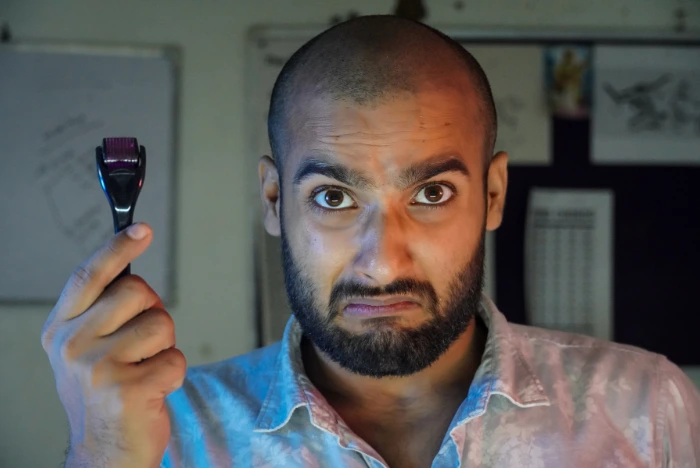
If you’re considering derma rolling, here are a few things I’ve learned from my own experience and research. First, start with a shorter needle length like 0.5mm if you’re doing it at home. Longer needles carry more risk and are generally better handled by professionals.
Clean your scalp and the roller before each session. I used rubbing alcohol to sterilize my derma roller before and after use. Roll in different directions — horizontal, vertical, and diagonal — with gentle pressure. You don’t need to press hard; the needles do the work.
Give your scalp time to recover between sessions. I found once a week to be the right frequency for my scalp, but everyone’s different. If you notice prolonged redness, irritation, or any signs of infection, stop and consult a healthcare professional.
Consider what you’re applying to your scalp after rolling. Some people use minoxidil, while others prefer natural oils. I’ve explored several approaches to making thin hair thicker, and combining microneedling with topicals has been one of the more interesting options I’ve tried. The Mayo Clinic recommends discussing any hair loss treatment plan with a qualified healthcare provider, which I’d echo — especially if you’re dealing with progressive thinning.
The most important thing is to set realistic expectations. Derma rolling isn’t a miracle solution. In my experience, it helped me maintain existing hair and may have supported some regrowth, but it works best as part of a broader approach rather than a standalone fix.
My results may not be typical. What worked for me may not work for you. Always seek professional medical advice.
Conclusion
Derma rolling for hair growth is a topic with growing research support, particularly when combined with topical treatments. My personal experience over about a year showed modest benefits — it helped me maintain hair and may have supported some regrowth, but it couldn’t stop male pattern baldness on its own.
The clinical evidence suggests microneedling can improve hair parameters as an adjunct therapy, though most studies involve professional-grade devices and protocols. If you’re considering derma rolling, start conservatively, be consistent, and talk to your dermatologist about whether it makes sense for your situation.
Key Takeaways
- Derma rolling creates micro-injuries that may stimulate growth factors and improve topical absorption, though most research has been conducted with clinical-grade devices
- Needle length matters — shorter needles (0.25mm to 0.5mm) are generally safer for at-home use, while longer needles have been more studied in clinical settings
- Consistency beats intensity — using a derma roller once a week with proper scalp recovery produced better results in my experience than more frequent sessions
- Combining with topicals may help — research suggests microneedling combined with topical treatments can improve hair count more than either approach alone
- Set realistic expectations — derma rolling works best as part of a broader hair care approach, not as a standalone solution for progressive hair loss

Abhishek Bolar
Certified Hair Care Writer