TL DR
For early hair loss, topical Minoxidil and Finasteride are best; for advanced baldness, hair transplants are superior. A topical gel combining both medications is a safer starting point than oral pills for halting thinning and regrowing hair. For significant baldness where follicles are inactive, a hair transplant surgery like FUE is the most effective solution. This surgical procedure is a major investment, with 3,000 grafts costing between $9,000 and $20,000. Remember that non-surgical results are not permanent and require continuous use to maintain hair growth. The best first step is to consult a dermatologist to diagnose your hair loss and create a personalized treatment plan.
Losing your hair can feel like a punch to the gut. Trust me, I’ve been there. One day you’re rocking a full head of hair, the next you’re staring at your reflection, wondering where it all went. The panic sets in, and then the endless Google searches begin: “which hair restoration is the best?” It’s a minefield of information, conflicting advice, and often, outright scams. I’ve spent years navigating this landscape, trying everything from questionable home remedies to the latest scientific breakthroughs, all in pursuit of reclaiming my hairline. This isn’t just a clinical overview; it’s my personal, no-holds-barred account of what actually worked, what didn’t, and the hard-won lessons I learned along the way. If you’re tired of the hype and ready for some real talk about hair restoration, you’ve come to the right place. Let’s dive into the messy, hopeful, and sometimes frustrating world of getting your hair back.
My Early Experiments: The Non-Surgical Quest for Hair Growth
The initial shock of seeing more hair in the drain than on my head sent me scrambling for a quick fix. I considered many hair restoration options, but my first stop was derma rolling. The theory is that the tiny needles stimulate blood circulation in the scalp and facilitate hair growth. I committed to it for seven or eight months, but other than getting a bruised scalp from time to time, I didn’t see much of an impact. It was a frustrating and slightly painful dead end in my journey to find the best hair restoration treatment.
Undeterred, I pivoted to natural oils, drawn in by the promise of a gentle, chemical-free solution. I tried using a combination of rosemary oil and pumpkin seed oil, and sometimes I would mix rosemary with jojoba oil, hoping to regrow hair naturally. I kept this routine up for four or five years, often doing it simultaneously with derma rolling. I suppose it helped to a certain extent, mostly with maintaining the hair I still had rather than regrowing what was lost. It felt like I was just slowing the inevitable.
This is a common experience for many individuals experiencing hair loss. Options like Low-Level Laser Therapy (LLLT) and Platelet-Rich Plasma (PRP) also promise results, but their efficacy varies wildly. According to one clinical trial, at 24 weeks, the regrowth efficacy for women was highest with a specific branded treatment (30.09 TH/cm2), followed by LLLT (16.62), and Minoxidil (12.13). For men, the top performer was another branded treatment (21.03 TH/cm2), followed by LLLT (18.75) and Dutasteride (18.37). While some methods help, true regrowth for significant thinning hair often requires more potent solutions.
The Game Changers: Minoxidil, Finasteride, and the Topical Solution
After years of mixed results, I finally turned to the two FDA-approved titans of non-surgical hair loss treatment: Minoxidil and Finasteride. These are considered the gold standard for a reason. Minoxidil, widely known as Rogaine, is a vasodilator that works by improving blood circulation to the hair follicle, which can stimulate hair growth. Finasteride, on the other hand, tackles the root hormonal cause of male pattern baldness by reducing the scalp’s levels of Dihydrotestosterone (DHT), the hormone responsible for shrinking hair follicles.
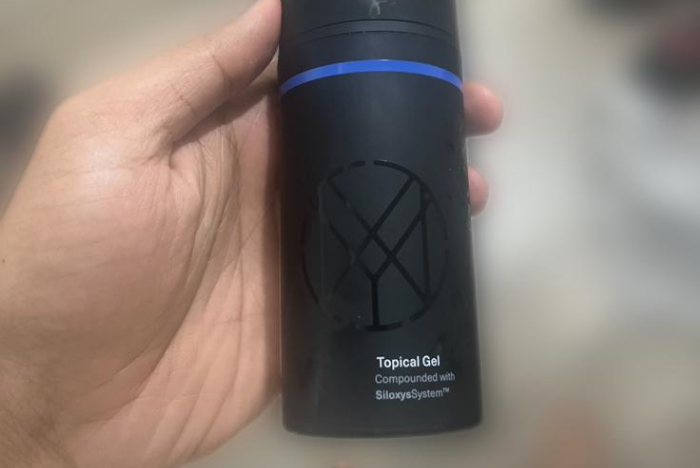
My breakthrough came in the last eight or nine months when I started using a prescription topical gel from Xyon. This gel combines both Minoxidil and Finasteride, offering a two-pronged attack on hair loss. Since I use a topical gel, it is much safer than taking Finasteride orally. I had heard many horror stories about oral Finasteride and its potential to mess with your hormones and cause side effects like reduced libido, so I was hesitant to use it. The best solution I could find was this topical gel, and it has been working really well for me, promoting new hair growth without the systemic risks.
I would say before considering any oral options, it’s better to start with a topical gel. If you are willing to take the risk and do some thorough research, an oral solution might be an option, but the topical route is a safer first step. This approach has been a significant step forward in my hair restoration journey, visibly improving hair density in my thinning areas. However, just to be clear, for those who are completely bald, I don’t think this gel would do much. It’s best for those with partial balding or thinning hair who still have active hair follicles to save.
When Non-Surgical Isn’t Enough: Understanding Hair Transplant Options
For advanced Hair Loss or areas of complete baldness where follicles are no longer active, non-surgical methods hit their limit. This is where Hair Transplant surgery becomes the most effective and often necessary option. The goal of this organ transplantation is to move healthy, DHT-resistant hair follicles from a donor area (usually the back and sides of the head) to the balding or thinning areas on the scalp. The three main techniques you’ll hear about are FUT, FUE, and DHI, and understanding them is key to choosing the right path.
Follicular Unit Transplantation (FUT), or the “strip method,” involves removing a strip of scalp from the donor area, which is then dissected into individual follicular units for implantation. While it can yield a high number of grafts, it leaves a linear scar. An FUE hair transplant (Follicular Unit Extraction) involves harvesting individual hair follicles directly from the scalp with a small punch tool, leaving tiny, dot-like scars that are less noticeable. DHI (Direct Hair Implantation) is a variation of FUE where follicles are implanted immediately after extraction using a special tool, offering precise control over angle and direction.
Choosing between these methods depends on your degree of hair loss, budget, and desired hairstyle. The success of any Hair Transplant, however, hinges on the skill of your Surgeons. An experienced hair transplant surgeon can create a natural-looking hairline and minimize complications. While advanced technologies like NeoGraft and ARTAS offer robotic assistance for FUE, human expertise remains paramount. One study showed the discard rate of follicles was higher with the ARTAS robot than with manual FUE (10.71% vs. 5.46%). Even after surgery, a hair loss Treatment plan involving Minoxidil or Finasteride is often recommended to protect your remaining native hair.
Beyond the Procedure: Cost, Recovery, and Long-Term Hair Care
A Hair Transplant is a significant investment, not just physically but financially. This is a major factor for anyone considering surgical hair restoration. When people ask, “How much do 3,000 hair grafts cost?” the answer varies dramatically based on the surgeon’s experience, the clinic’s location, and the technique used. A procedure of that size can range anywhere from $9,000 to over $20,000 in the United States. This cost is a crucial part of the decision-making process and highlights the importance of thorough research.
The recovery process also differs significantly between treatment options. Surgical procedures like FUT and FUE require downtime. One study noted that patients undergoing half-head sessions recovered in about 4.6 days, compared to 6.1 days for full sessions. In contrast, non-surgical treatments like topical gels or Low-Level Laser Therapy have virtually no downtime. This practical consideration is vital for planning and managing expectations. Hair restoration is not a one-and-done fix; it demands a long-term commitment to a dedicated hair care routine to maintain your results and preserve existing hair.
It’s also important to understand that hair loss patterns and treatment pathways can differ by gender. Androgenetic alopecia (AGA), the most common form of hair loss, affects around 80% of males and 50% of females by the age of 70 years, but the presentation and ideal treatments can vary. Finding reputable hair restoration clinics and qualified Surgeons is the most critical step. Be wary of offers that seem too good to be true and prioritize practitioners who show a portfolio of natural-looking results and prioritize patient health and safety above all else.
My Verdict: Finding the Best Hair Restoration for You
After years of trial, error, and finally, success, my main takeaway is this: there is no single “best hair restoration” for everyone. The ideal solution is deeply personal and depends entirely on the extent of your Hair Loss, your budget, your tolerance for risk, and your ultimate goals. What works wonders for one person might be completely ineffective for another. The key is to understand your options and create a strategy tailored specifically to your situation, starting with an accurate diagnosis from a professional.
For those just noticing thinning hair or in the early stages of pattern hair loss, I can’t stress enough the importance of early intervention. Non-surgical treatments like a topical gel combining Minoxidil and Finasteride can make a profound difference, potentially halting hair loss and even regrowing some hair. I would say before considering any oral options, it is better to go for a topical gel. If you are willing to take the risk and do thorough research, an oral solution might be for you, but it’s a bigger commitment with more potential side effects.
However, just to be clear, for those who are completely bald, I don’t think this gel would do much. In that case, it would be better to consider a Hair Transplant. Once you’re done with your hair transplantation procedure, surgeons usually suggest you use Minoxidil and Finasteride to maintain the results. In my case, I was just partially bald, so I had the time to restore my hair with the help of this topical solution. Ultimately, the best first step is to consult a qualified dermatologist or hair transplant surgeon. They can assess your scalp, diagnose the cause of your hair loss, and recommend a personalized treatment plan, giving you a realistic outlook and a clear path forward.
Frequently Asked Questions About Hair Restoration
What is the most effective hair restoration?
The “most effective” hair restoration is highly individual. For early-stage thinning, a combination of FDA-approved non-surgical treatments like topical Minoxidil and Finasteride is often very effective. For more advanced or widespread baldness, a hair transplant surgery (like FUE or FUT) is typically the most effective and permanent solution for restoring density. Often, the best results come from combining a hair transplant with ongoing medical management to preserve non-transplanted hair.
How much do 3,000 hair grafts cost?
The cost for 3,000 hair grafts varies significantly but generally ranges from $9,000 to over $20,000 in the U.S. Factors influencing the price include the surgeon’s reputation, the geographic location of the clinic, and the specific technique used (FUE is often more expensive per graft than FUT).
What did Elon Musk use to regrow his hair?
While never publicly confirmed by him, experts in the field widely speculate that Elon Musk’s dramatic hair transformation is the result of a combination of treatments. It’s likely he used Finasteride to stop further hair loss and underwent one or two hair transplant procedures, probably using the FUE technique, to restore his hairline and density.
Are non-surgical hair restoration results permanent?
No, the results from non-surgical treatments like Minoxidil and Finasteride are not permanent. They require continuous, ongoing use to maintain their effect. If you stop the treatment, the hair loss will typically resume, and any hair you regrew may be lost within a few months.
Finding the best hair restoration is a personal journey, as different methods suit different stages of hair loss. The author found success with a topical Minoxidil and Finasteride gel for thinning, while hair transplants are best for advanced baldness. Consulting a professional is the most critical first step to create a personalized and effective treatment plan.
Key takeway
- Consult a dermatologist to diagnose your hair loss and create a personalized treatment plan.
- Use a topical Minoxidil and Finasteride gel for early-stage hair loss as a safer first step.
- Minoxidil and Finasteride are the two FDA-approved, gold-standard non-surgical hair loss treatments.
- Non-surgical treatments work on thinning hair, while transplants are necessary for areas of complete baldness.
- Prioritize surgeon skill over robotic tech for hair transplants, as manual FUE can be more effective.
- 3,000-graft hair transplant procedure can cost between $9,000 and over $20,000 in the US.
- Commit to a long-term treatment plan, as non-surgical results require continuous use to be maintained.