TL;DR
You can tell hair loss is from stress if it’s sudden, diffuse shedding all over your scalp. This type of shedding, known as Telogen Effluvium, typically occurs two to three months after a major stressful event. It differs from genetic pattern baldness, which is slow, progressive, and causes a receding hairline or crown thinning. A major stressor can prematurely push up to 30% of hair follicles into the resting (shedding) phase. Unlike genetic hair loss, this shedding is usually temporary and hair regrows once the stressor is removed. To get a definitive answer, see a dermatologist for a proper diagnosis and to rule out other causes.
When I first saw clumps of hair in the shower drain, my mind immediately jumped to one conclusion: stress. It’s the go-to villain, right?
I was convinced my high-pressure job was thinning my hair. But after weeks of obsessive mirror-checking and combing through my hair, I had to face a harder truth.
When I was losing my hair, I first attributed my hair loss to stress. Later I realized that it was something to do with male pattern baldness. My journey forced me to become a detective, to learn the real signs of stress-related hair loss versus the genetic cards I’d been dealt.
If you’re staring at your pillow or brush with a sense of dread, you need to know how to know if hair loss from stress is your real problem. Let’s cut through the noise.
The “Aha!” Moment: Is It Really Stress or Is It Pattern Hair Loss?
This is the first, most critical question you have to answer. Getting this wrong means wasting time, money, and emotional energy on the wrong problem.
The key is in the pattern.
Stress-related hair loss, a condition called Telogen Effluvium, typically looks like diffuse thinning all over your scalp. You’ll notice more hair shedding in general—on your pillow, in the shower, on your clothes—but not a specific bald spot or receding line. In contrast, pattern hair loss (also known as androgenetic alopecia) follows a predictable script.
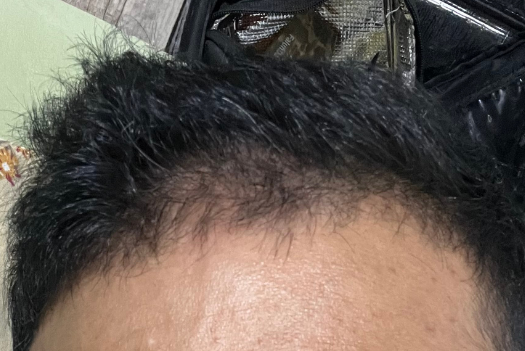
For men, it’s the receding hairline at the temples and a thinning crown, creating that classic “M” shape. For women, it’s often a widening part right down the middle. As a kid, I always thought my dad lost his hair because he was stressed and angry most of the time. Looking back, his classic hairline was a dead giveaway for genetics, not his temper.
The Visual Clues Checklist
Grab a mirror and let’s get analytical. What does stress hair loss look like?
Look for diffuse shedding all over your head, where your hair just feels less dense everywhere. You might notice your ponytail is thinner or you can see more of your scalp under bright lights. This points toward a systemic stressor. Now, check your hairline and crown specifically.
Is the hair loss concentrated there?
Is your hairline moving back from your forehead, especially at the corners?
Is the spot on the back of your head getting wider?
hat’s the classic signature of pattern baldness. Don’t let wishful thinking cloud your judgment; an honest assessment is your first step toward an effective plan.
My Contrarian Take: Stress is Often the Scapegoat
Here’s my honest opinion after going down this rabbit hole: I personally think stress has very minimal effect over the head loss you go through if it’s pattern baldness.
We blame stress because it feels controllable. The idea that our hair loss is a genetic, progressive condition is terrifying, so we latch onto a cause we think we can manage with yoga and self-care.
But in my experience, chronic stress might accelerate things slightly, but it’s rarely the root cause of classic male pattern baldness. The real driver is often hormonal and genetic, and ignoring that to focus solely on stress management is a huge mistake that delays effective treatment.
Decoding Telogen Effluvium: The Real Stress-Related Hair Loss
If your hair loss is diffuse and sudden, you’re likely looking at Telogen Effluvium (TE).
This is the legitimate form of hair loss from stress. Think of it like this: a major shock to your system—be it intense psychological stress, a major surgery, rapid weight loss, or even an illness—can push a huge number of your hair follicles into the “resting” (telogen) phase all at once.
Normally, only about 10% of your hair is in this phase, but a major stressor can push that number up to 30% or more. The most important clue is the delay. The hair doesn’t fall out during the stressful event. It falls out 2-4 months later, when those resting hairs are finally shed to make way for new growth.
If you can trace your increased hair shedding back to a major stressor a few months ago, you’re probably dealing with TE. According to one study on pandemic-related stress, COVID-19-related fear had an adjusted odds ratio of 2.620 for developing Telogen Effluvium, showing a clear link between psychological trauma and this type of hair loss.
What Kind of Stress Causes This?
We’re not talking about a bad day at work or feeling anxious about a deadline. The stressor that triggers Telogen Effluvium is typically significant and acute.
Think job loss, a death in the family, a major illness with a high fever, or intense psychological trauma. Your body essentially hits the emergency brake on non-essential functions like hair growth to conserve resources for survival. The stress hormone cortisol floods your system, disrupting the normal hair growth cycle.
Studies from the National Institutes of Health confirm this. For example, one analysis revealed that during exam periods, students’ stress levels and hair parameters changed significantly compared to a control group, demonstrating how even academic pressure can impact hair health.
Other Forms of Stress-Induced Hair Loss
While TE is the most common type of stress-related hair loss, severe stress can also be linked to other conditions.
One is Alopecia Areata (AA), an autoimmune disease where the body’s immune system mistakenly attacks its own hair follicles, causing smooth, round, patchy bald spots on the scalp, eyebrows, or body hair.
The same pandemic study found that COVID-19-related traumatic stress symptoms also increased the odds of developing AA, with an adjusted odds ratio of 1.84. Another, less common condition is Trichotillomania, which is a psychological disorder characterized by the compulsive urge to pull out one’s own hair. Knowing which form of hair loss you’re facing is crucial for finding the right path forward.
My Deep Dive into DHT (And Why You Need to Understand It)
This was the game-changer for me. I think it is important that one knows how DHT works and what kind of a role it plays in male pattern baldness. If your hair loss looks like a receding hairline or thinning crown, you need to forget about cortisol for a minute and learn three letters: DHT. Dihydrotestosterone is a powerful androgen, a byproduct of testosterone, that is the primary driver of pattern hair loss in genetically susceptible individuals. It’s not the stress hormone itself, but the sensitivity of your hair follicles to this specific androgen.
Here’s how it works: DHT binds to receptors in the hair follicles on your scalp. Over time, this binding process triggers something called miniaturization. The follicles shrink, their growth phase shortens, and they begin to produce shorter, finer, less pigmented hairs. Eventually, the follicle may shut down and stop producing hair altogether. This is the engine of pattern baldness. It’s a slow, progressive process dictated by your genes and hormones, not by a stressful week at work.
Understanding this mechanism is incredibly empowering. It stops you from blaming yourself for being “too stressed” and points you toward treatments that actually target the root of the problem, like Finasteride, a medication that works by reducing DHT levels in the body.
Navigating the “Experts” and Bad Advice on Hair Loss Treatment
Once you start searching for answers about hair loss, you’ll be bombarded with miracle cures, from special shampoos to dietary supplements. Be skeptical. I learned this the hard way. Early in my journey, I had a consultation with one of the self-proclaimed hair specialists who completely denied male pattern baldness.
She insisted my thinning hair was due to poor circulation and that a rich diet would reverse my balding, which is completely untrue. This kind of advice is dangerous because it preys on your hope and delays you from seeking legitimate, science-backed hair loss treatment. It sends you down a path of buying expensive but ineffective products while your condition potentially worsens.
A healthy diet rich in protein, iron, zinc, and vitamins is fantastic for your overall hair health. Good nutrition provides the building blocks for strong hair shafts and can absolutely support regrowth after a bout of Telogen Effluvium. However, no amount of biotin or vegetables will reverse or cure genetic pattern hair loss by blocking DHT. Think of diet and stress management as creating the best possible environment for your hair to grow, but not as a tool to change your genetic blueprint.
The only person who should give you a medical diagnosis is a board-certified dermatologist who can examine your scalp, take a full medical history, and differentiate between TE, Alopecia Areata, and androgenetic alopecia.
The Road to Recovery: What Hair Regrowth Actually Looks Like
So, will your hair grow back?
The answer depends entirely on the cause of your hair loss. For stress-related Telogen Effluvium, the news is overwhelmingly positive. The answer is almost always yes. Since TE is a temporary form of hair loss caused by a shock to the system, the hair growth cycle normalizes once the stressor is removed and your body feels safe again. You can expect to see the excessive shedding slow down within a few months, and new hair regrowth should become visible within 3 to 6 months.
It’s a slow process requiring patience, but recovery is the standard outcome. You can support this process with good nutrition and solid stress management techniques like meditation, exercise, or yoga to keep stress hormone levels in check.
However, for pattern hair loss, the story is different. It is a progressive condition, not a temporary one. Without intervention, the hair loss will continue. In this context, “recovery” means taking action to stop the progression.
Treatments like Minoxidil (which promotes blood flow to the follicle) and Finasteride (which reduces DHT) are clinically proven to help you maintain the hair you have. In some cases, they can even stimulate regrowth in dormant follicles. But this requires consistent, long-term use. T
he goal is to halt the miniaturization process and manage the condition over your lifetime, not to find a one-time cure.
Conclusion: Your First Step is Diagnosis, Not Panic
If there’s one thing I want you to take away from my entire ordeal, it’s this: you cannot treat what you haven’t correctly identified. Stop Googling “how to stop hair loss naturally” and start asking “what type of hair loss do I have?” Analyze the pattern. Is it diffuse hair shedding all over your scalp, or is it a receding hairline and thinning crown? Pinpoint the timeline.
Did the increased hair loss start suddenly, a few months after a major life event like a surgery or job loss? Be brutally honest with yourself. Your next step isn’t to buy a cart full of biotin supplements or expensive shampoos. It’s to book an appointment with a dermatologist. Getting a real medical diagnosis is the single most powerful and effective step you can take.
It ends the guesswork and puts you on the right path.
Key takeway
- Summary: Stop assuming stress is the cause of your hair loss. While stress-induced hair loss is real, it presents as sudden, diffuse shedding, whereas most male hair loss is a slow, genetic process. Getting a correct diagnosis from a dermatologist is the crucial first step toward effective treatment.
- Blaming stress for hair loss can prevent you from seeking effective treatment for the actual cause.
- Stress-induced hair loss (Telogen Effluvium) causes sudden, diffuse shedding about three months after a major event.
- Male pattern baldness is a slow, genetic process caused by the hormone DHT shrinking hair follicles.
- Get a definitive diagnosis from a board-certified dermatologist to determine the true cause of your hair loss.
- Track your hair loss with monthly photos to create an objective record for your doctor.
- Request comprehensive blood work to rule out nutritional deficiencies or underlying thyroid issues.
- Commit to a long-term treatment plan for genetic hair loss, as results are slow and steady.

Abhishek Bolar
Certified Hair Care Writer