AI Summary
No, dandruff does not directly cause permanent hair loss, but it contributes to temporary hair thinning. The chronic scalp inflammation from dandruff weakens hair follicles and disrupts the normal hair growth cycle, leading to increased shedding. Constant scratching to relieve the itch physically damages hair shafts and follicles, causing breakage and further hair fall. Affecting up to half of adults worldwide, dandruff creates a poor scalp environment that is not ideal for healthy hair growth. You can stop this shedding by using medicated shampoos with ingredients like ketoconazole to control the underlying fungus and inflammation. If thinning persists after treating dandruff, see a dermatologist to rule out other causes like genetic hair loss.
Many people experience both dandruff and hair thinning. They all have this common and stressful question.
Even though dandruff itself doesn’t directly cause permanent hair loss, the relationship between your scalp health and hair growth is something you cannot ignore.
Look, a unhealthy, inflamed scalp can certainly contribute to temporary hair shedding and make existing thinning more noticeable.
My goal is to make you understand how dandruff and related scalp conditions can impact your hair,
I have a few tricks up my sleeve that can prevent permanent damage, and what you can do to maintain a healthy scalp. I know this because I have been through this phase.
The Complex Relationship: Does Dandruff Directly Cause Hair Loss?
As I mentioned earlier, dandruff itself doesn’t directly cause permanent hair loss in the way that genetic conditions like male pattern baldness do.
You won’t go bald simply because you have flakes.
But when dandruff sticks around and your scalp stays inflamed, it can make things tough for healthy hair to grow.
This inflammation can weaken the connection between the hair follicle and the hair shaft, leading to increased shedding.
It’s kind of like trying to grow a plant in bad soil—if the conditions aren’t right, the plant won’t thrive or reach its full potential. Your hair works the same way: a healthy scalp gives it the best chance to grow strong.
The inflammation can prematurely push hairs from the growing phase into the shedding phase, resulting in more hair falling out than usual.
This is typically a form of temporary hair loss known as telogen effluvium.
While the hair can regrow once the scalp condition is treated, prolonged inflammation can potentially damage hair follicles over time, making regrowth more difficult.
Furthermore, more severe forms of dandruff, like seborrheic dermatitis, involve even greater levels of inflammation and oil production.
This condition can cause greasy, yellowish scales and significant redness on the scalp. The intense irritation and buildup can suffocate hair follicles, impeding their ability to produce strong, healthy hair.
Even though dandruff doesn’t directly cause hair loss, its indirect effects are important enough that if you’re worried about thinning hair, keeping your scalp healthy should be at the top of your list.
Tackling the inflammation head-on is the best way to break the cycle and give your hair a better chance to grow.
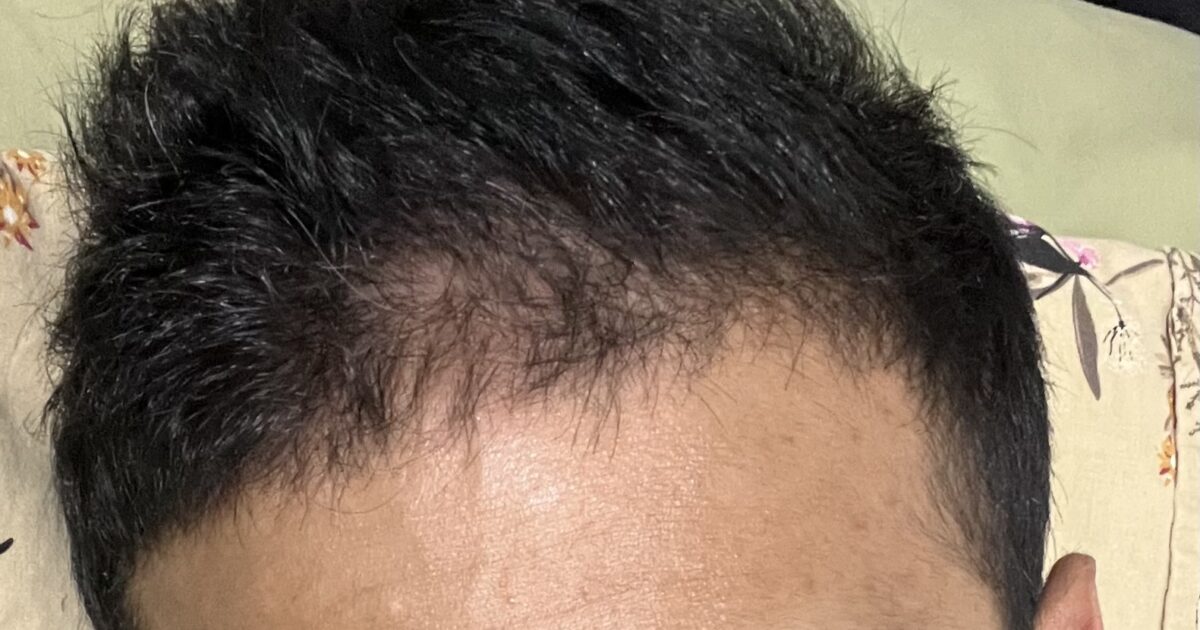
Take a look at my hair before I finally found a solution with the right shampoo. I’ll share more about the journey later, but I can definitely say that dandruff took a toll on my hair—it even caused noticeable thinning for a while.
Understanding Dandruff and Its Impact on Hair Health
You know how annoying dandruff can be, right?
You have dandruff not because you’re dirty or doing anything wrong, but just because your skin is a bit sensitive.
The weird thing is, most of the time it actually comes from this little fungus called Malassezia globosa.
Sounds gross, but it’s totally normal to have it on your scalp.
For some of us, though, it gets a bit out of hand. It feeds on the oils your scalp makes and creates something called oleic acid.
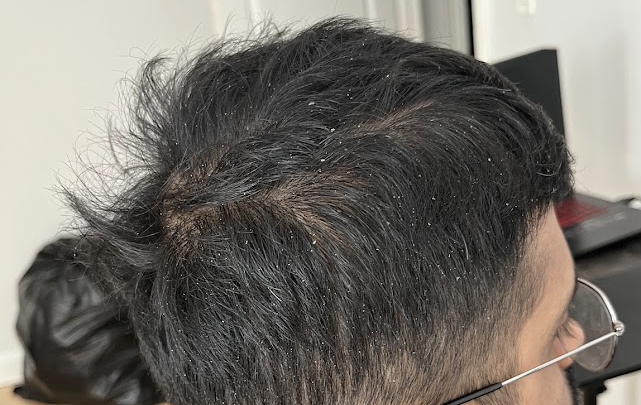
That’s when your scalp can get irritated and inflamed, which makes your skin cells shed way faster than usual—hence, all those flakes and that annoying itch.
And honestly, it’s that nonstop irritation and itchiness that really mess with your hair. When your scalp is always inflamed, it can actually weaken the hair follicles right at the root. That means any new hair that grows in can end up more fragile and likely to break or fall out more easily.
According to research, this common scalp issue is incredibly widespread, as dandruff affects up to half of adults worldwide.
So, basically, there are millions of people out there dealing with a scalp that just isn’t giving their hair the best shot at growing strong. Over time, that not-so-great environment can lead to more hair shedding than you’d like.
It’s also worth pointing out that not all flakes are created equal! Regular dandruff is one thing, but there are more intense scalp issues to watch out for.
Take seborrheic dermatitis, for example—it’s like dandruff’s big cousin, causing red skin and greasy scales that can show up on your scalp, face, or even your chest. Then there’s scalp psoriasis, which is actually an autoimmune thing that leads to thick, silvery scales and can cause some temporary hair loss where it pops up.
Both of these conditions bring a lot more inflammation, which can really mess with your hair and how it grows. That’s why it’s so important to figure out exactly what’s going on with your scalp, so you can get the right treatment and keep both your scalp and hair as healthy as possible.
The Scratching Cycle: How Itchy Scalp Contributes to Thinning Hair
Honestly, one of the biggest ways dandruff can mess with your hair isn’t even about the flakes or that fungus—it’s about how much we scratch.
That itch can drive anyone crazy, and it’s so tempting to just go at your scalp for relief. The problem is, all that scratching can actually do a lot of damage. Even if you keep your nails short, they’re still rough on your scalp, and every time you scratch, you’re risking harm to those tiny hair follicles that help your hair grow.
It turns into this vicious cycle: the dandruff makes you itch, you scratch to feel better, but then that scratching makes your scalp even more irritated.
The more you scratch, the worse the inflammation gets, which just makes you want to scratch more. It’s rough! All that repeated scratching can weaken your hair, cause it to break off, or even pull it out before it’s ready. Over time, you might notice your hair looking thinner—not necessarily from big clumps falling out, but from this slow, steady damage.
You may not see the results of scratching right away, but it builds up. Tiny injuries add up, and after a while, you can really notice your hair isn’t as full as before.
The good news? This is usually temporary—if you can get the itching under control and stop scratching, your hair has a good chance of bouncing back. That’s why breaking the “scratch cycle” and treating whatever’s making your scalp itch is so important for keeping your hair healthy.
Effective Solutions: Treating Dandruff to Support Hair Growth
The best part is, if your hair is thinning because of dandruff, there’s a lot you can do to turn things around.
Since the main problem is usually inflammation and scratching, treating the dandruff itself can stop the hair loss and even help your hair grow back healthier.
The first thing I always recommend is finding a good medicated shampoo. Look for one with ingredients like ketoconazole—it’s an antifungal that actually tackles the root cause by getting rid of the Malassezia fungus.
Other effective ingredients are zinc pyrithione, which helps slow down extra skin cell growth, and salicylic acid, which gently exfoliates those stubborn flakes.
Honestly, figuring this out was a total game-changer for me. I used to have a ton of dandruff and the itching was non-stop, especially in hot weather. I even tried home remedies—like rubbing lime juice on my scalp before shampooing—and while they gave a bit of relief, nothing really stuck.
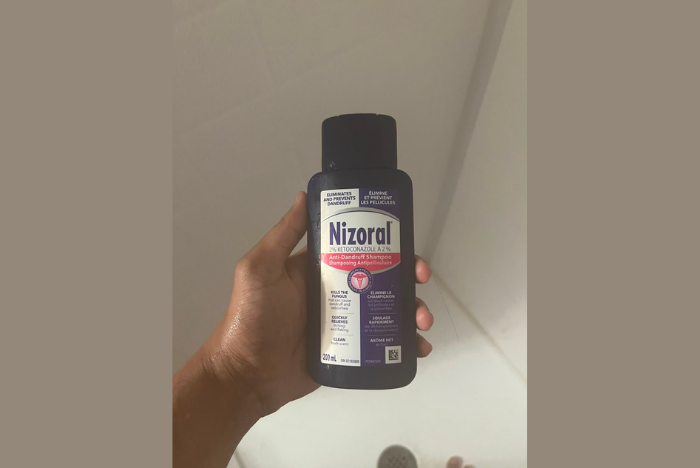
After doing some research (and lots of trial and error), I landed on Nizoral Anti-Dandruff Shampoo. It has ketoconazole, and I couldn’t believe how fast it worked—after just two washes, the flakes were almost gone, and the itch finally stopped.
Not scratching anymore gave my hair follicles a real chance to heal. Nizoral is strong enough to tackle even the worst dandruff because it doesn’t just cover up the symptoms; it actually gets rid of the fungus causing all the trouble.
Using a proven shampoo like this a couple of times a week can really help your scalp recover, so your hair can grow without all that constant irritation and damage.
When to Seek Professional Help for Dandruff and Hair Thinning
While those medicated shampoos work wonders for a lot of people, sometimes they’re just not enough. If you’ve been using them regularly for a few weeks and you’re still seeing flakes or dealing with an itchy scalp, it’s probably time to see a dermatologist.
Some scalp issues, like really stubborn seborrheic dermatitis or scalp psoriasis, just need a bit more firepower—sometimes even prescription treatments.
Also, if you notice your hair is thinning a lot or it’s getting worse quickly, don’t try to just tough it out. A dermatologist can help you figure out exactly what’s going on. They’ll be able to tell if your hair loss is just from a scalp condition, or if it’s something like androgenetic alopecia (which is genetic).
Getting the right diagnosis is key to finding the best treatment and getting your hair and scalp back on track. This is especially important for men, as male androgenetic alopecia (AGA) is the most common form of hair loss in men, impacting 80% of males by the age of 80.
A dermatologist can really dig into what’s going on by carefully checking your scalp—sometimes even doing a scalp biopsy if needed—to figure out exactly what’s causing the trouble. Once they know what you’re dealing with, they’ll put together a treatment plan that fits you. This could mean prescription-strength steroid creams to calm inflammation, stronger antifungal shampoos, or even specific hair loss treatments like minoxidil or finasteride. The sooner you get help, the better your chances of keeping your hair healthy and getting your scalp back to normal.
Beyond Dandruff: Other Factors Contributing to Hair Thinning
It’s really important to realize that even if you have dandruff, it might not be the only reason your hair is thinning. Hair loss is complicated, and there can be a bunch of factors at play. If you focus only on getting rid of flakes, you could be missing something bigger—like genetics.
For a lot of guys, male pattern baldness is the main culprit, and if it runs in your family, you might be more prone to thinning hair no matter how healthy your scalp is.
I know that fear all too well. When I visited India, the barber would take one look at my scalp and thinning hair and confidently say I’d go bald one day. It honestly scared me, and as I saw my hair getting thinner, I couldn’t help but think he might be right.
That worry pushed me to try everything—I did deep dives online and experimented with olive oil, rosemary oil, even onion juice. None of it made a huge difference, probably because my problem wasn’t just about scalp health.
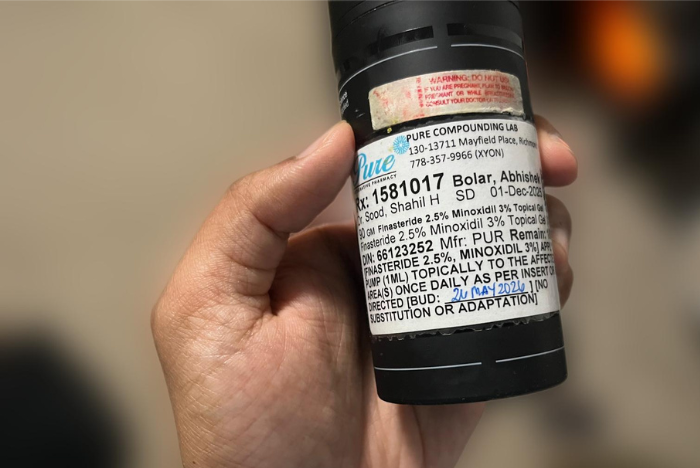
What finally made a real impact was addressing the genetic part. For me, the game-changer was a topical product called Xyon gel that’s meant to help with hair regrowth. I’d actually lost all the hair in the front, but after about a year of using it, not only did the hair come back, it was even thicker.
This whole experience really drove home the point that while treating dandruff matters, you also need to look at things like genetics, stress, hormones, and nutrition if you want the best chance at keeping your hair healthy.
Conclusion
So, does dandruff cause thinning hair? Honestly, it’s not a straight yes or no. Dandruff by itself doesn’t make you go bald for good, but all that constant inflammation and itching can definitely lead to more hair shedding—and it can make thinning hair look a lot worse. If your scalp isn’t healthy, it’s tough for your hair to be strong.
The cycle of irritation and scratching can mess with your hair’s natural growth, and over time you might notice a real drop in volume.
The main thing to remember is that healthy hair starts with a healthy scalp. Tackling dandruff early with medicated shampoos and being gentle with your hair can calm things down and cut back on shedding.
That gives your hair a much better chance to grow in thick and strong. But if you’re still struggling or the hair loss is getting serious, it’s worth seeing a dermatologist. They’ll help you figure out what’s really going on and create a plan just for you. At the end of the day, taking care of your scalp is one of the best things you can do if you want to keep your hair looking its best in the long run.
Key Takeways
- Use medicated shampoos with ketoconazole to control the fungus and inflammation that cause dandruff and itching.
- Avoid scratching your scalp to prevent physical trauma to hair follicles, which leads to breakage and increased hair shedding.
- Consult a dermatologist if over-the-counter treatments fail or hair loss is severe to get an accurate diagnosis.
- Address potential genetic hair loss with proven treatments if thinning persists after your scalp condition improves.

Abhishek Bolar
Certified Hair Care Writer