AI Summary
Fine hair refers to the diameter of individual strands — each hair is narrow. Thin hair refers to density — how many strands grow on your scalp. You can have fine hair with high density, or coarse hair with low density, and they need very different care. Two simple tests at home can tell you which one you have in under two minutes.
If you’ve ever looked in the mirror, noticed your hair looks flat or sparse, and wondered whether it’s “fine” or “thin” — you’re not alone. Almost everyone uses these two terms interchangeably. I did too, for years. Even dermatologists and hairstylists point out that this confusion leads people to use the wrong products and get the wrong advice.
But here’s the thing: they measure completely different things. And confusing them means you could be using the wrong products, getting the wrong haircut, or stressing about the wrong problem entirely.
I’m Abhishek — someone who has personally experienced the challenges of male pattern baldness and a certified trichologist (Trichology and Hair Therapy Course, Elevify, 2026). Through this blog, I share the insights I’ve gained, along with honest thoughts on the products and approaches I’ve used. I’m not a medical professional — always consult a qualified doctor for personalized advice.
Let me break this down in plain terms so you can figure out exactly what’s going on with your hair.
What Is Fine Hair?
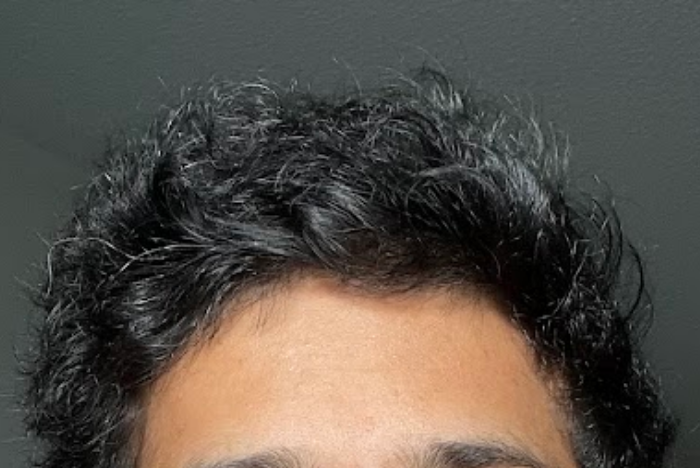
Fine hair describes the width of a single strand. That’s it.
Each hair strand has a diameter. Fine hair sits at the narrow end of the range — usually somewhere between 0.03 and 0.04 millimeters. You were born with this. It’s genetic. Your hair follicles produce strands at a specific thickness, and for fine-haired people, that thickness is smaller than average.
Here’s how fine hair tends to behave:
- It feels soft and silky when you roll a strand between your fingers — sometimes you can barely feel it at all.
- It looks shiny because a smooth, narrow strand reflects light cleanly. Fine ≠ unhealthy.
- It goes flat quickly because each strand carries less structure. Volume disappears by lunchtime.
- It tangles easily and gets weighed down by heavy products.
- It shows damage faster — heat styling and color take effect more quickly than expected.
The key thing to understand: fine hair says nothing about how much hair you have. You can have fine strands packed densely on your head — tons of narrow hairs that add up to a full look. Or you can have fine strands with gaps showing through. Fine is one dial. Density is the other.
What Is Thin Hair?
Thin hair describes density — the number of strands growing on your scalp per square inch.
Research published in Dermatologic Surgery found that healthy scalps have between 124 and 200 hairs per square centimeter. That’s a wide range. And it has nothing to do with how thick each strand is. Someone with fine strands might have twice the follicle count of someone with coarse strands. Or the reverse. A larger study in the European Journal of Dermatology examined over 2,000 people across 24 ethnic groups and confirmed what stylists have long observed: strand thickness and density vary independently.
Here’s how thin (low-density) hair tends to behave:
- Your scalp shows through when you part your hair, especially in good light.
- Your ponytail feels slim even when you think you have plenty of hair.
- There’s less overall coverage — your hair doesn’t look “full” from any angle.
- Regrowth can feel fragile — new hairs coming in may be weaker.
Thin hair can be genetic — some people are born with lower density. But it can also develop over time. Hormonal changes, stress, aging, and nutritional deficiencies can all reduce the number of active follicles. That’s when “thin” shifts from a characteristic to a change worth paying attention to.
Fine Hair vs Thin Hair: Side by Side
| Fine Hair | Thin Hair | |
|---|---|---|
| What it measures | Diameter of each strand | Number of strands on scalp |
| How it feels | Soft, silky, barely there | Sparse, less fullness |
| Main cause | Usually genetic | Genetic or acquired (hormones, stress, age) |
| Common challenge | Falls flat, tangles, can’t hold style | Visible scalp, less coverage |
| Looks like | Flat by noon, but plenty of hair | Scalp showing through, especially at part |
| Best approach | Lightweight volume formulas | Scalp support and strand protection |
Two dials. Two different problems. Two different solutions.
How to Tell If You Have Fine Hair
You don’t need a microscope. Two simple tests tell you everything.
The Strand Test
Take one clean, dry strand of hair. Roll it slowly between your thumb and forefinger.
- If you can barely feel it — your hair is fine.
- If it feels like a distinct thread with body — it’s medium to coarse.
For a second reference, grab a sewing thread. Lay a strand of your hair next to it. Fine hair looks noticeably thinner than the thread.
The Light Test
Hold a single strand up to a light source.
- Fine hair is almost see-through — light passes through it easily.
- Coarse hair is more opaque.
I remember doing this test for the first time and being surprised. I always thought my hair was “normal.” Turns out, it was fine. That explained why every heavy product I tried made it look worse.
How to Tell If You Have Thin Hair
Same idea — simple tests, real answers.
The Ponytail Test
Gather all your hair into a ponytail. Note the circumference.
- Under 2 inches — low density (thin)
- 2 to 3 inches — medium density
- Over 4 inches — high density
The Scalp Check
Part your hair in a few different places under good lighting.
- If your scalp shows through easily — lower density.
- If you can barely see any scalp — higher density.
The Change Test
This one matters most. Naturally fine or thin hair is stable — it looked like this a year ago and five years ago.
Thinning is a change. A ponytail that used to wrap three times and now wraps four. A part that’s widened. More shedding than your normal baseline.
When I was around 28 or 29, I started noticing gaps forming at my hairline. Even my barber pointed it out before I fully recognized what was happening. That’s when “thin” stopped being a characteristic and became something I needed to address.
Can You Have Both Fine and Thin Hair?
Yes. And this is where most people get confused.
You can have fine strands packed densely — lots of narrow hairs that add up to full coverage. That’s fine but not thin.
You can have fewer strands that are each wider — less coverage, but individual hairs feel substantial. That’s thin but not fine.
Or you can have both — narrow strands and fewer of them. That’s the combination with the least margin. Heavy products make it worse, and the wrong haircut can leave you with see-through ends for months.
The problem is that most product labels and generic advice don’t account for these combinations. A shampoo designed for “thinning hair” might target follicle density when your real issue is strand diameter. A volumizing product might add lift to fine strands but do nothing for low density.
Knowing which dial you’re adjusting is the first step to actually solving the problem.
Fine Hair vs Thin Hair: What Products and Styles Work
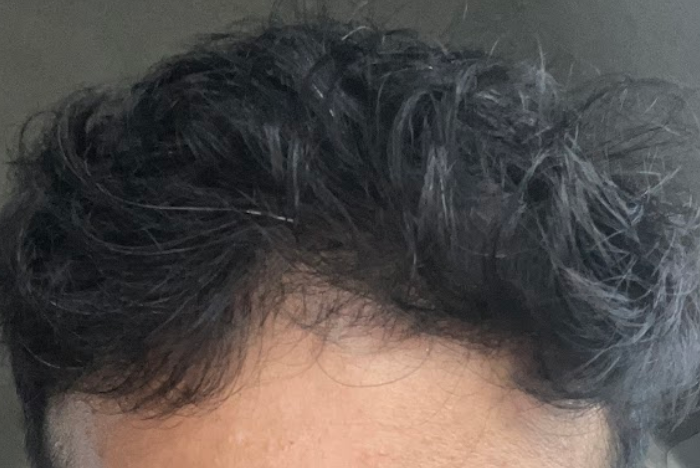
Since fine and thin hair have different root causes, they need different approaches.
For Fine Hair
Fine hair needs lightweight everything. Heavy oils, butters, and thick creams weigh narrow strands down flat.
What tends to work:
- Volumizing shampoos that clean without residue
- Lightweight conditioners applied only to the ends, never the roots
- Root-lifting sprays or mousses for lift at the scalp
- Avoiding heavy serums on the lengths
I personally use Nioxin’s Scalp + Hair Thickening System Kit — it includes a shampoo, conditioner, and a thickening treatment foam. The foam adds volume without the weight. The day after I wash with it, my hair looks noticeably fuller.
For Thin Hair
Thin hair needs scalp support and strand protection. Every strand counts more when you have fewer of them.
What tends to work:
- Gentle shampoos that don’t strip the scalp
- Scalp treatments that support follicle health
- Avoiding harsh brushing — every strand lost is more visible
- Strategic haircuts that maximize coverage
If your thinning is related to hair loss rather than just natural density, making thin hair look thicker involves a combination of the right products and the right cut.
When “Thin Hair” Is Actually Hair Thinning
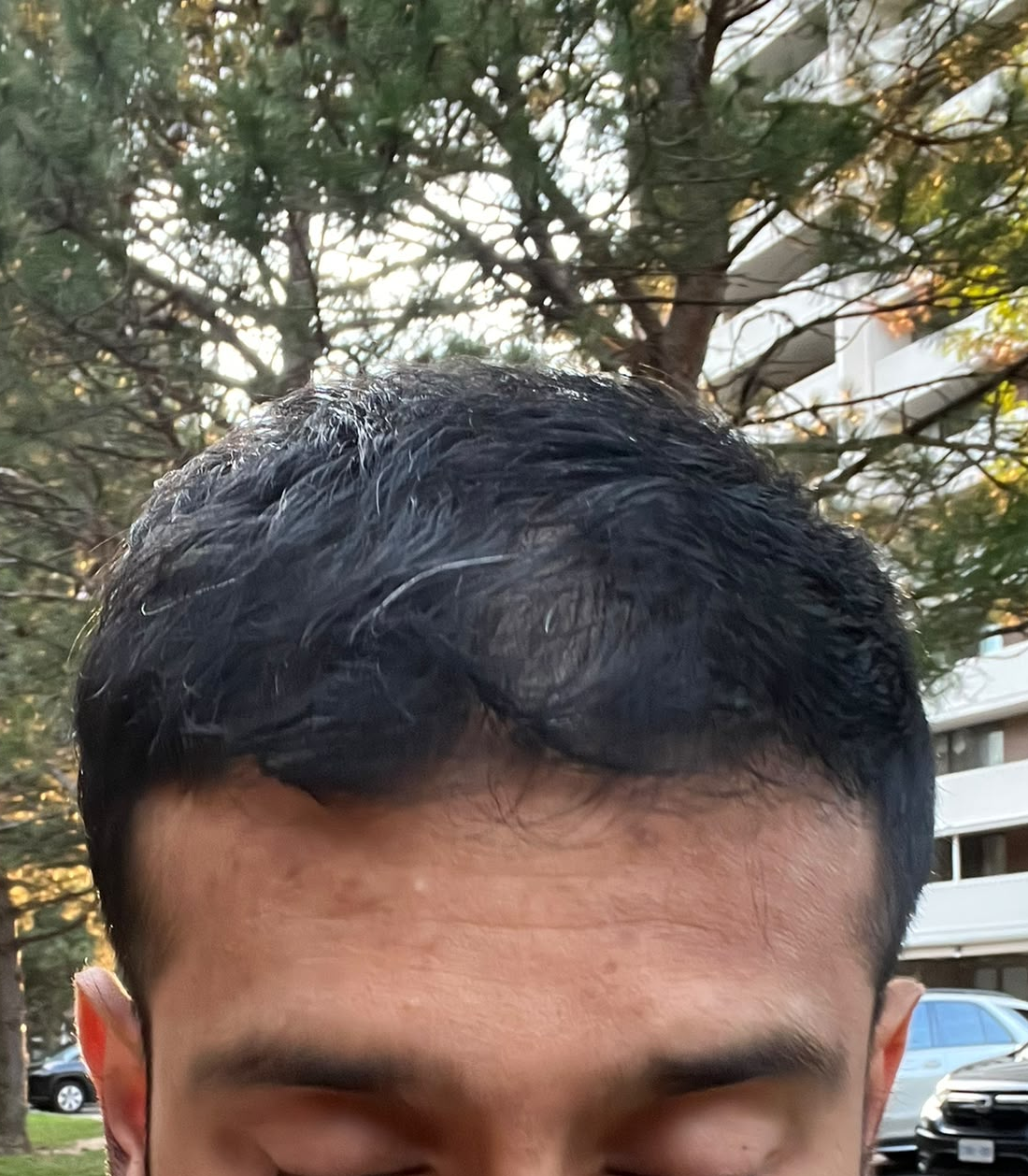
There’s a difference between hair that’s always been thin and hair that’s thinning. The first is a characteristic. The second is a change — and it often signals something worth looking into.
In my case, I first noticed my hair thinning back in 2018. Before that, I always had pretty thick hair. Seeing gaps form at my front hairline was tough. My barber used to look at my scalp and speculate I’d eventually go bald. That terrified me.
Hair thinning in men is often related to age or genetics. In my case, I wasn’t sure what the cause was. I consulted a hair expert who suggested nutrients like iron, biotin, and multivitamins. But the real shift happened when I started looking at what causes thinning hair instead of just treating the symptoms.
If you’re noticing changes — wider parts, more shedding, scalp showing where it didn’t before — that’s worth addressing. Not panicking, but addressing. The sooner you understand whether you’re dealing with naturally fine or thin hair versus active thinning, the better your options.
What I’ve Learned From Dealing With My Own Hair
I’ve thrown a lot at my hair over the years. Olive oil, pumpkin seed oil, onion juice, rosemary oil, jojoba oil, derma rolling — you name it, I tried it. Some of it helped briefly. Most of it didn’t move the needle.
The biggest lesson? Understanding what I was actually dealing with. I didn’t just have fine hair that was going flat. I had hair that was thinning — losing density at the front, gaps forming, the ponytail getting slimmer.
What eventually made a real difference was a combination approach. I use a topical treatment prescribed by my dermatologist on alternate days. On the other days, I use Nioxin for thickness and Nizoral once a week to keep my scalp healthy. I also eat pumpkin seeds, sardines, eggs, and spinach regularly — foods that support hair health from the inside.
I’m still not at 100% thickness. But compared to where I was, the improvement is real.
The point isn’t that my routine will work for you. The point is that I wasted time using products for “thin hair” when my actual problem was frontal hair thinning that needed a different approach entirely.
If you’re trying to figure out the best hairstyles to work with what you have, short hair can be better for thin hair in many cases — it reduces weight and makes density look more uniform.
Frequently Asked Questions
Is my hair fine or just thin?
Hold a single strand between your fingers. If you can barely feel it, your hair is fine. Now part your hair and look at your scalp. If scalp shows through easily, you also have thin (low-density) hair. These are separate tests measuring separate things.
Can fine hair ever get thicker?
You can’t change the diameter you were born with. But you can make fine hair look fuller with volumizing products, the right haircut, and lightweight formulas that don’t weigh strands down. If your density is also low, that’s a separate concern to discuss with a dermatologist.
Why does my fine hair look thin even when I have a lot of it?
Fine strands are narrow — there’s less visible mass even when strand count is high. Heavy products make this worse by weighing fine strands flat. Lightweight volumizing products help fine hair look fuller without the weight.
Should I use thickening shampoo if I have fine hair?
It depends on the root cause. If your density is normal but your strands are fine, volumizing products often work better — they add lift and body to the hair you have. If you’re also losing density, a thickening system like Nioxin may be worth discussing with your dermatologist.
What’s the difference between fine and thick hair?
“Thick” gets used for two different things. Thick as in wide strands — the proper term is coarse. Thick as in a lot of hair — the proper term is dense. Fine vs coarse is about diameter. Fine vs dense is not really a comparison, because they measure different things and you can be high on both at once.
Key Takeaways
- Fine hair measures strand diameter; thin hair measures density — they’re separate things
- Two simple tests (strand test + ponytail test) tell you which one you have
- You can be fine and dense, thin and coarse, or any combination — each needs different care
- Heavy products make fine hair worse; gentle care matters more for thin hair
- If your hair is changing — not just naturally one way — address it early rather than waiting

Abhishek Bolar
Certified Hair Care Writer